Common Beginner Pickleball Mistakes and How to Fix Them

Here's the thing about pickleball — it's easy to start, but everyone makes the same handful of mistakes when they first pick up a paddle. The good news? Once you know what to watch for, these are all simple fixes. Let's walk through the most common beginner pickleball mistakes and exactly how to correct them, so you can stop fighting yourself and start enjoying the game.
1. Gripping the Paddle Too Tight
This is the number one mistake we see. New players squeeze the paddle like they're holding on for dear life. It feels safe, but a tight grip makes your whole arm tense, which kills your touch, slows your reaction time, and can even lead to elbow soreness over time.
The fix: Hold the paddle like you're carrying a small bird — firm enough that it won't fly away, but gentle enough that you're not crushing it. On a scale of 1 to 10, aim for about a 4 or 5. A relaxed grip lets the paddle do the work and gives you much better feel for the soft game.
2. Hitting the Ball Too Hard
Beginners love to swing hard. It feels good, and every now and then you'll hit a winner. But here's the truth: in pickleball, consistency beats power almost every time. Hard hits tend to sail long, pop up for easy put-aways, or come back at you even faster.
The fix: Focus on placement over power. Aim for your opponents' feet, the middle of the court, or open spaces. A well-placed soft shot is far more effective than a hard shot right at someone's paddle. As you improve, you'll learn when to add pace — but for now, think smooth and controlled.
3. Forgetting the Double-Bounce Rule
This one catches almost everyone at first. After the serve, the ball has to bounce once on each side before anyone can hit it out of the air. New players get excited, see the ball coming, and smack it out of the air on the return of serve — which is a fault.
The fix: Make it a habit. Tell yourself "bounce, bounce" after every serve. Let the serve bounce, let your return bounce for the serving team, and only then can you start hitting volleys. It becomes second nature after a few games.
4. Stepping Into the Kitchen on a Volley
The kitchen — that 7-foot zone on both sides of the net — is off-limits for volleys. You can step in to hit a ball that's bounced, but if you hit the ball out of the air while any part of your body is touching the kitchen or its line, it's a fault. This is probably the most common fault in recreational play.
The fix: Stay aware of where you are on the court. When you're at the net volleying, keep your feet behind the kitchen line. If a ball drops short and you need to step in, hit it, then step back out before the next shot. Developing a feel for the kitchen line takes time, but it's one of the most important habits to build early.
5. Staying Back at the Baseline
A lot of beginners hang back near the baseline and never move forward. The problem? In pickleball, the team at the net has a huge advantage. If you stay back, your opponents get to control the net while you're stuck defending from behind.
The fix: After the serve and return (and the two bounces), work your way forward. You don't have to rush — move up in stages — but get yourself to the non-volley line whenever you can. That's where you want to be for the rest of the point.
6. Ignoring the Soft Game
Pickleball isn't all power. The soft game — especially dinking — is what separates players who improve quickly from those who plateau. Beginners often try to smash everything, which works against other beginners but falls apart against anyone who can keep the ball in play.
The fix: Practice dinking. A dink is a soft shot that lands in your opponent's kitchen. It's hard to attack, which forces them to hit up — and that's when you get the chance to put the ball away. Spend time on the soft game and your whole level will rise.
7. Poor Footwork and Standing Flat-Footed
Pickleball points can change direction fast. If you're standing flat-footed, you'll always be a step behind. Good footwork doesn't mean sprinting around — it means being ready to move in any direction at any moment.
The fix: Stay light on your feet. A small split step — a tiny hop as your opponent is about to hit — gets you balanced and ready to move. Keep your weight on the balls of your feet, knees slightly bent. It sounds small, but it makes a huge difference in how quickly you react.
8. Serving Too Hard
A big, fast serve feels impressive, but in pickleball the serve is just a way to start the point — it's not a weapon. Beginners who serve hard often hit faults or set up easy returns. Since only the serving team can score, a missed serve is a missed opportunity.
The fix: Aim for a consistent, controlled serve that lands deep in the service box. Placement and consistency matter far more than speed. Once you can serve reliably every time, you can start adding variety — but get the basics down first.
9. Not Communicating in Doubles
Pickleball is mostly played doubles, and nothing causes more chaos than two players both going for the same ball — or neither going for it. Communication is the glue that holds a doubles team together.
The fix: Call the ball. "Mine!" or "Yours!" — it doesn't have to be fancy. A simple call avoids confusion and collisions. As a general rule, the player the ball is hit toward takes it, and the middle ball goes to the player on their forehand side. Talk to your partner and you'll both play better.
10. Not Having Fun
It sounds obvious, but beginners sometimes get so focused on not making mistakes that they forget to enjoy themselves. Pickleball is supposed to be fun. It's social, it's active, and the community is one of the best parts of the sport.
The fix: Give yourself permission to make mistakes — everyone does, even experienced players. Laugh at the bad shots, celebrate the good ones, and focus on improving one thing at a time. The players who enjoy the process are the ones who stick with it and get better.
The Fastest Way to Fix Your Mistakes
Reading about mistakes helps, but the fastest way to fix them is with a coach who can watch you play and point out what you're doing in real time. That's exactly what GoodRally's beginner lessons and Foundations Clinic are built for. You'll learn proper technique from day one, catch your mistakes early, and build good habits that last. Come join us on the court — we'll help you play better and have more fun doing it.
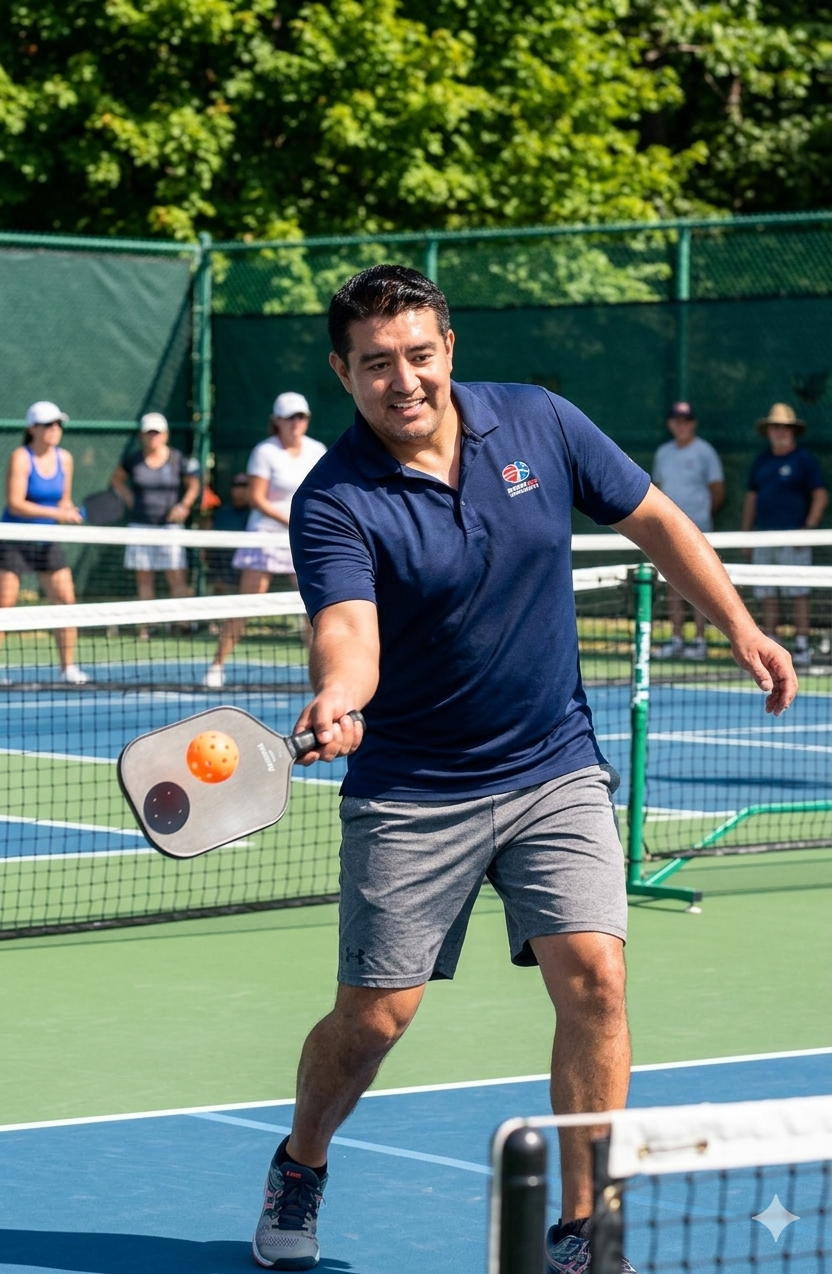
Darwin Jurado
Founder & Head CoachDarwin is the founder of GoodRally Pickleball and an NCCP-certified pickleball instructor specializing in helping beginners learn the right technique from day one. With a background in athletic performance and biomechanics, he helps beginners and recreational players across the Greater Toronto Area build confidence and develop solid fundamentals. His coaching philosophy is simple: keep it fun, build good habits early, and help every player rally with confidence.
Want to Learn Pickleball with a Coach?
GoodRally offers beginner lessons, foundations clinics, and private coaching across the GTA. Join the fun and start playing with confidence.
Join The Fun